 Notch
NotchUse your browser's Print (Ctrl/Cmd + P) and choose Save as PDF. This page works offline once you've opened it with a signal.
Large Bread Board
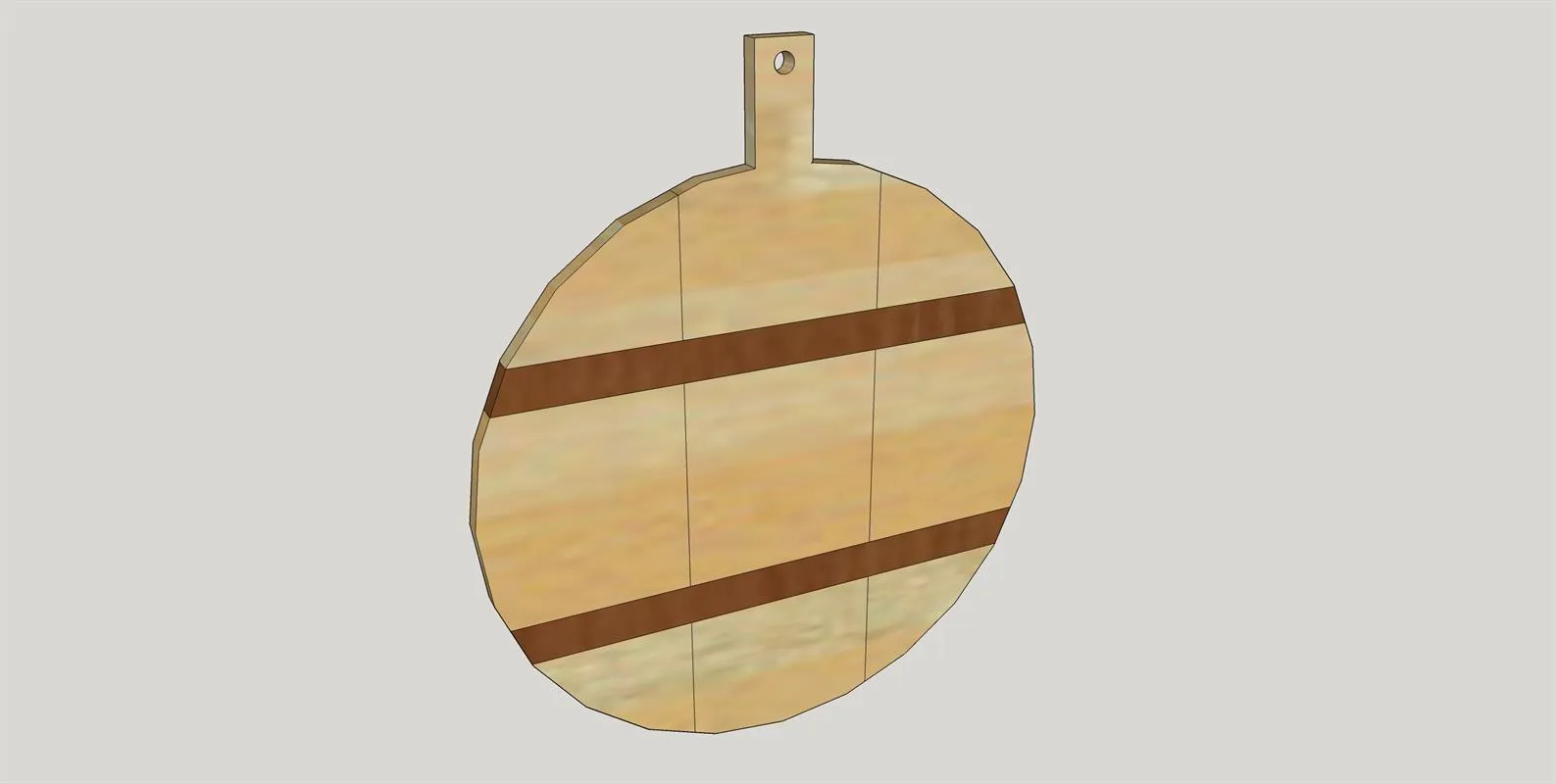
This bread board is a perfect display piece in your kitchen or on a dining room table.
- Difficulty
- Intermediate
- Time
- 3.8–7 hours
- Cost
- $$
Cut list
| Part | Qty | T × W × L | Material | ✓ |
|---|---|---|---|---|
| Maple Board | 8 | 3/4" × 7" × 7" | — | ☐ |
| Maple Board | 1 | 3/4" × 7" × 9" | — | ☐ |
| Walnut Boards | 2 | 3/4" × 1" × 21" | — | ☐ |
Materials
| Item | Qty | ✓ |
|---|---|---|
| Maple Board, 1x8 72" | 1 board | ☐ |
| Walnut Board, 1x2 48" | 1 board | ☐ |
| 1 1/4" Kreg Pocket Hole Screws (Hardwood) | 24 each | ☐ |
| Wood Glue | 1 each | ☐ |
| Pocket Hole Plugs (purchased or made with a Kreg Plug Cutter) | 24 each | ☐ |
Overall cost: $$. Lumber varies by region, species, and season, so we give a band rather than a figure.
Tools
- Drill / Driver
- Jigsaw
- Miter Saw
- Pocket Hole Jig
- Random Orbit Sander
- Router
- Table Saw
- Bar / Pipe Clamps — optional
- Tape Measure — optional
Instructions
1. Cut & Arrange
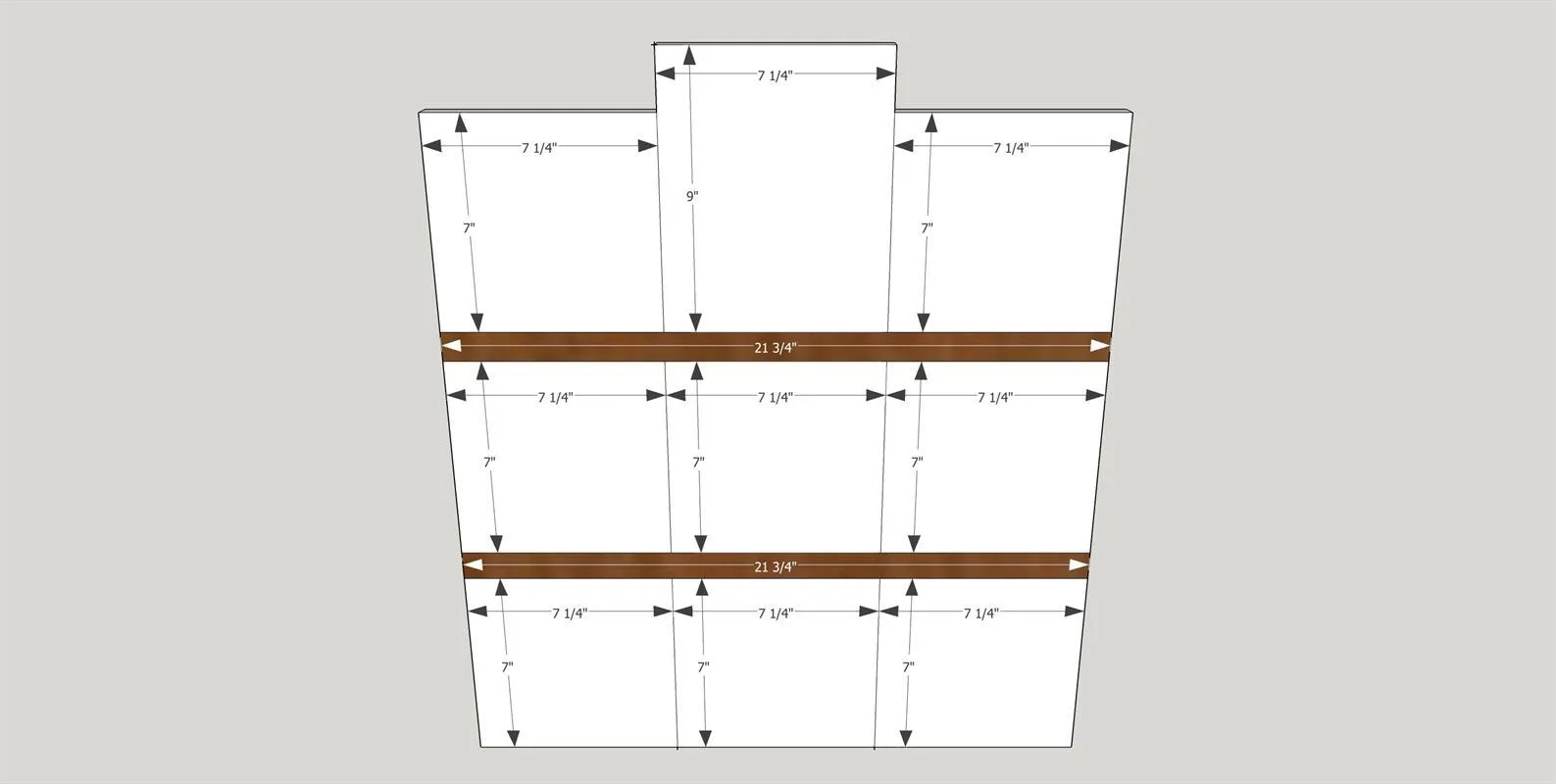
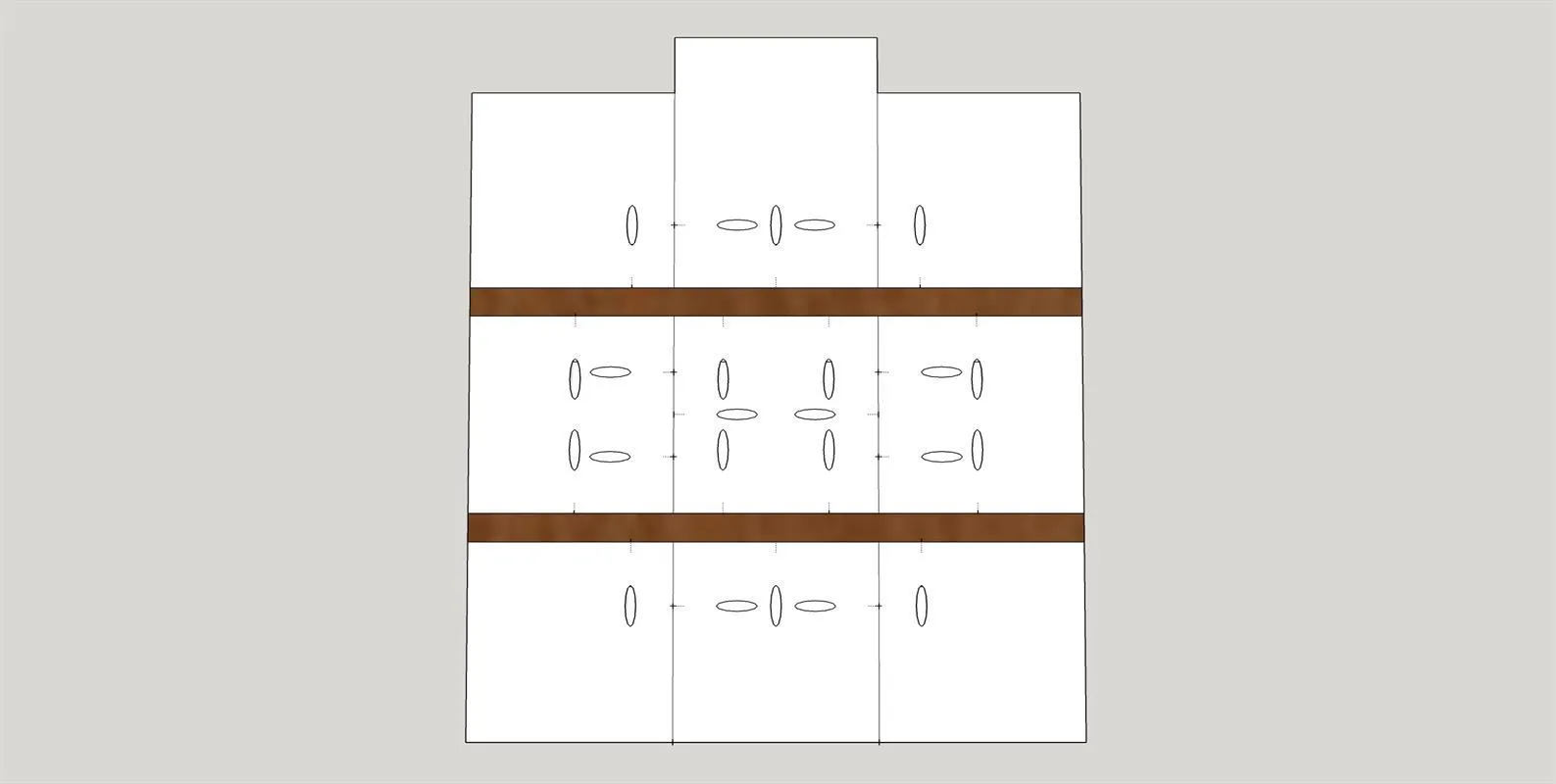
Cut the maple and walnut pieces to size and layout on a flat surface as per the diagram.
2. Drill Pocket Holes
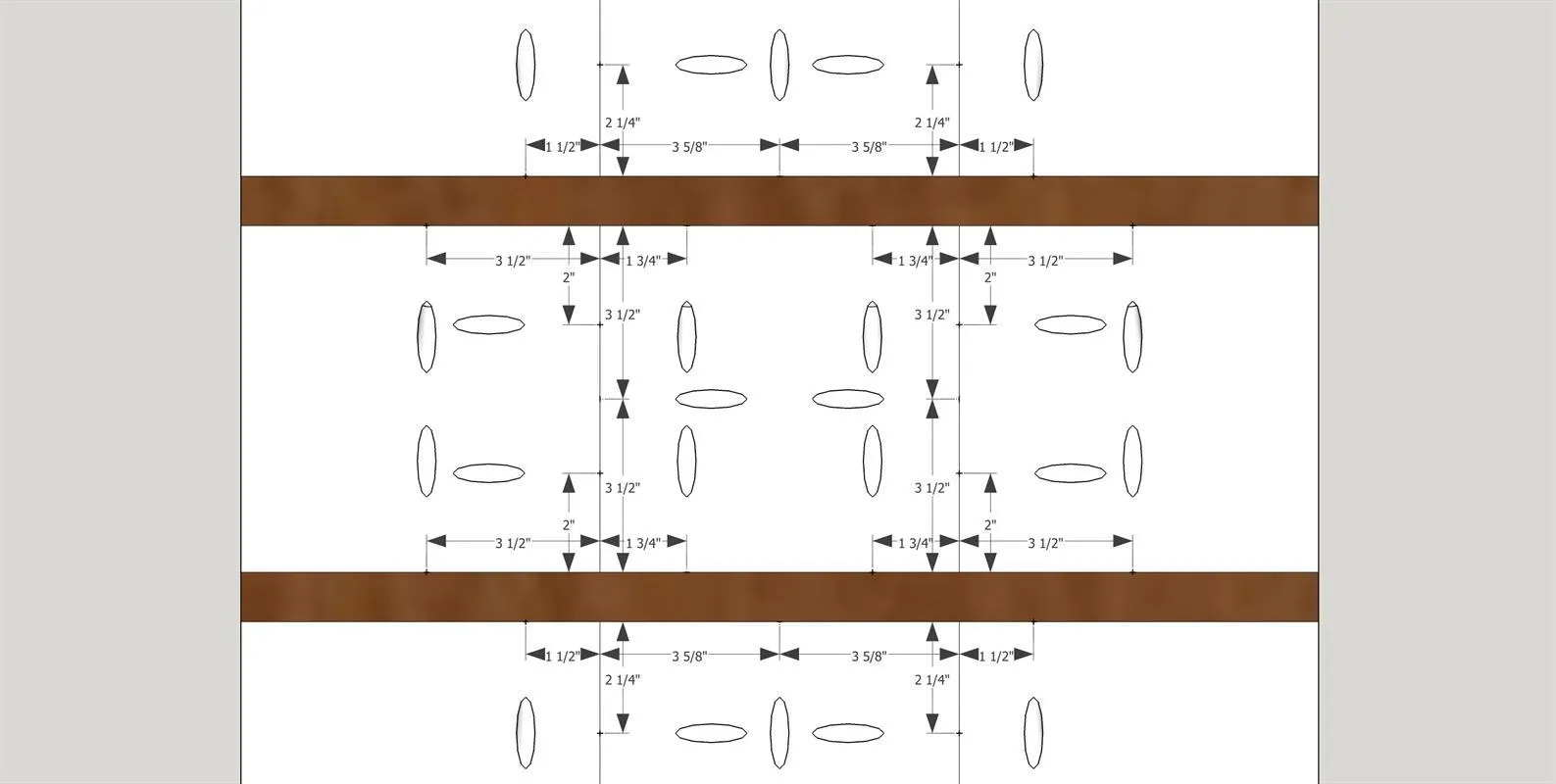
Drill pocket holes as per the attached diagram and measurements provided. After you drill the pocket holes in each piece, place it back in order.
3. Attach Maple Sections
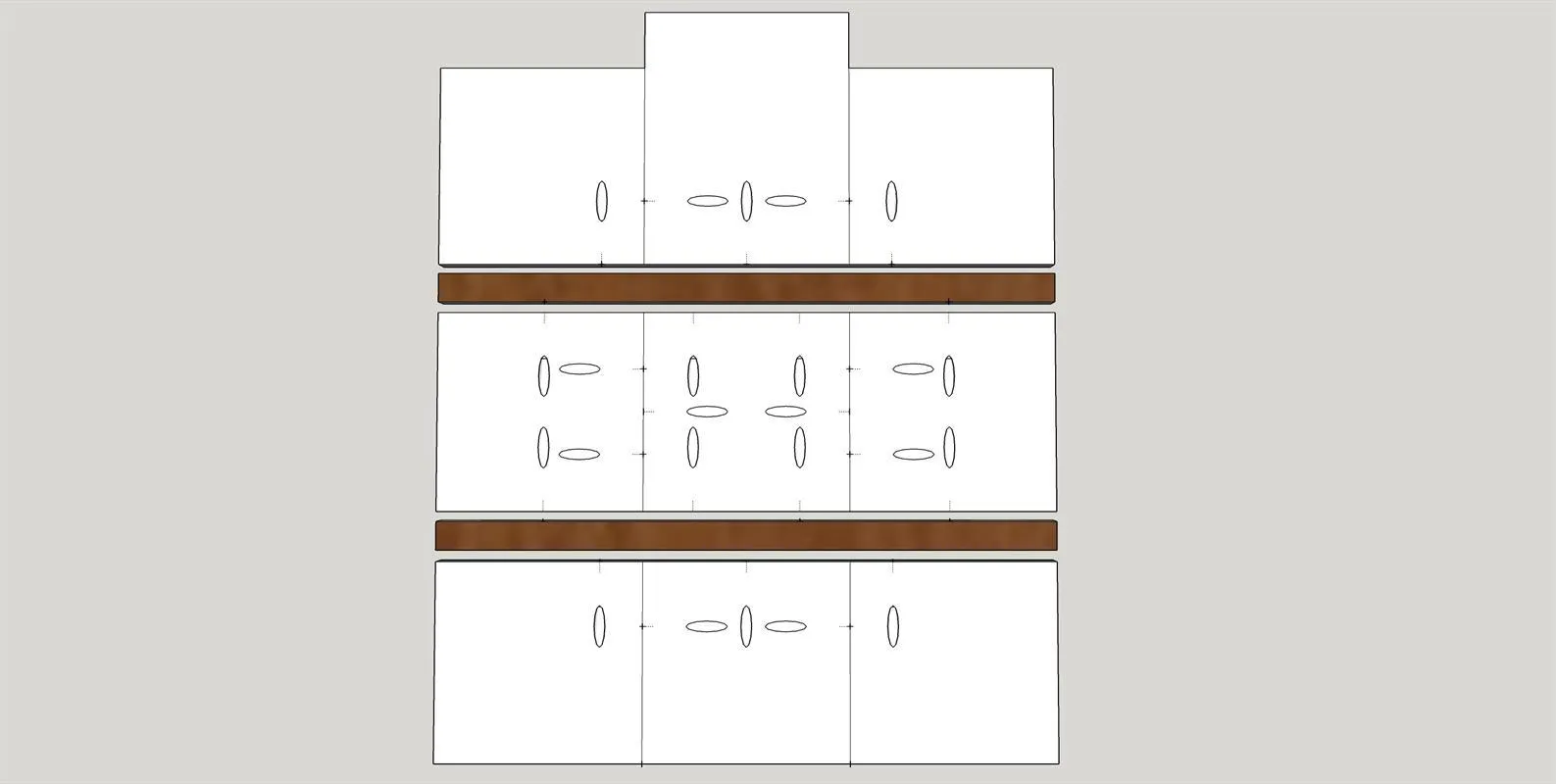
Attach the maple boards in each section to each other using wood glue, clamps and 1 1/4" Kreg hardwood pocket hole screws.
4. Attach Sections to Walnut
Attach the three maple sections to the walnut pieces with wood glue, clamps and 1 1/4" Kreg Pocket Hole Screws.
5. Fill Holes with Plugs (optional)
- Fill all pocket holes with maple pocket hole plugs. You can either purchase these from Kreg or purchase the Kreg Plug Cutter and make 24 plugs from the leftover maple lumber. This will give your board a clean and finished look on both sides.
- Add wood glue in each hole and then insert a plug.
6. Initial Sanding
Sand using an orbital sander fitted with either a 60 or 80 grit sandpaper to smooth out the seams and pocket hole plugs.
7. Cut Circle & Handle
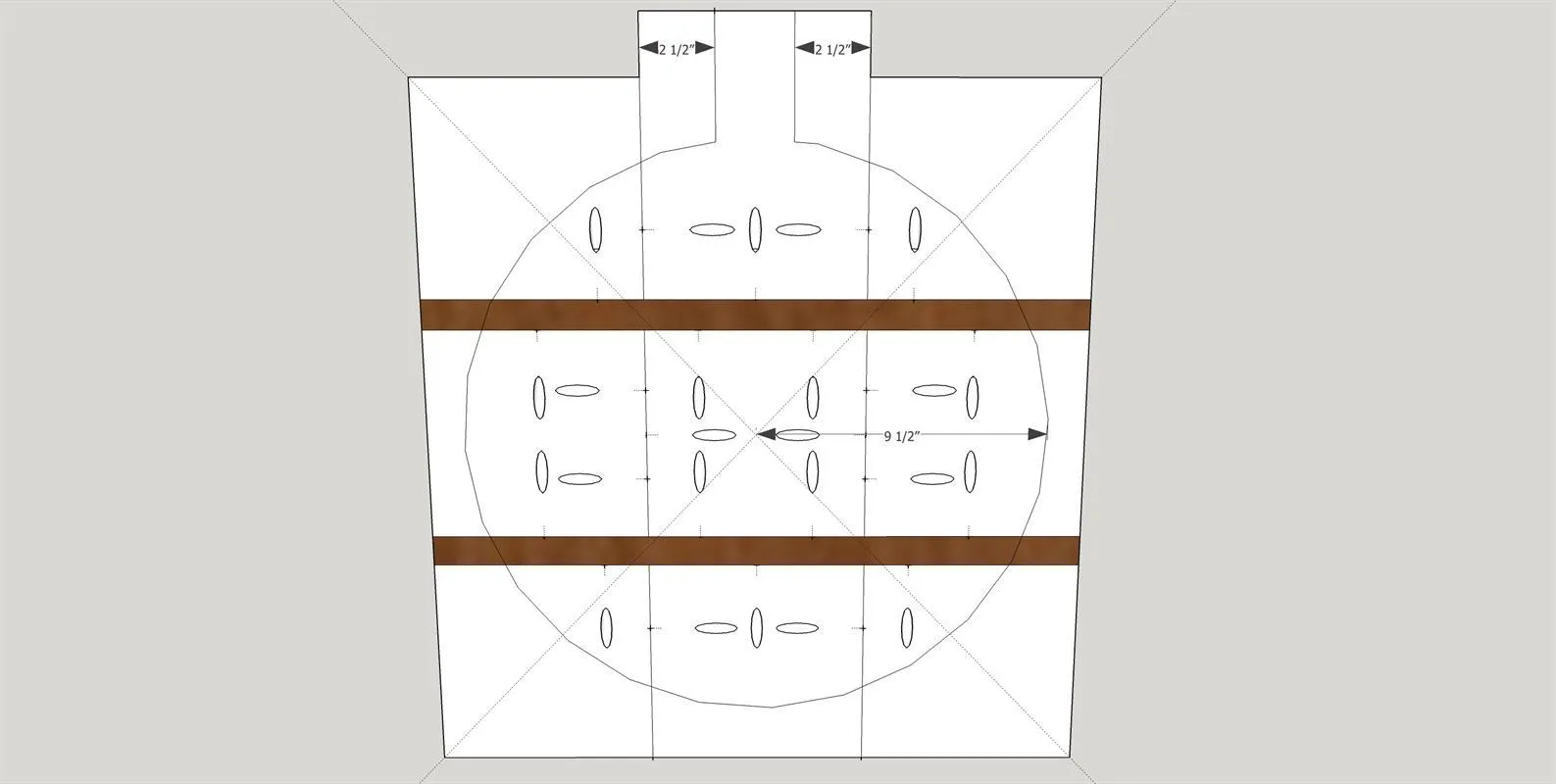
- Find the center of the board by drawing a line from corner to corner as shown on the diagram. Create a circle jig using a scrap piece of wood or cardboard that is about 1/4" thick, 1" wide and 10" long.
- Drill a 3/16" hole at one end, and then drill another 3/16" hole 9 1/2" from that hole. Temporarily attach the one end to the center mark of the board with a nail or screw. Use a pencil in the other hole to scribe the outline of the circle. Draw a straight line 2 1/2" from either side of the center board at the top down to the top of the circle to create the handle. You can also round out the area where the handle meets the bread board.
- Cut out carefully using a jigsaw fitted with a scroll blade.
8. Cut Hole in the Handle
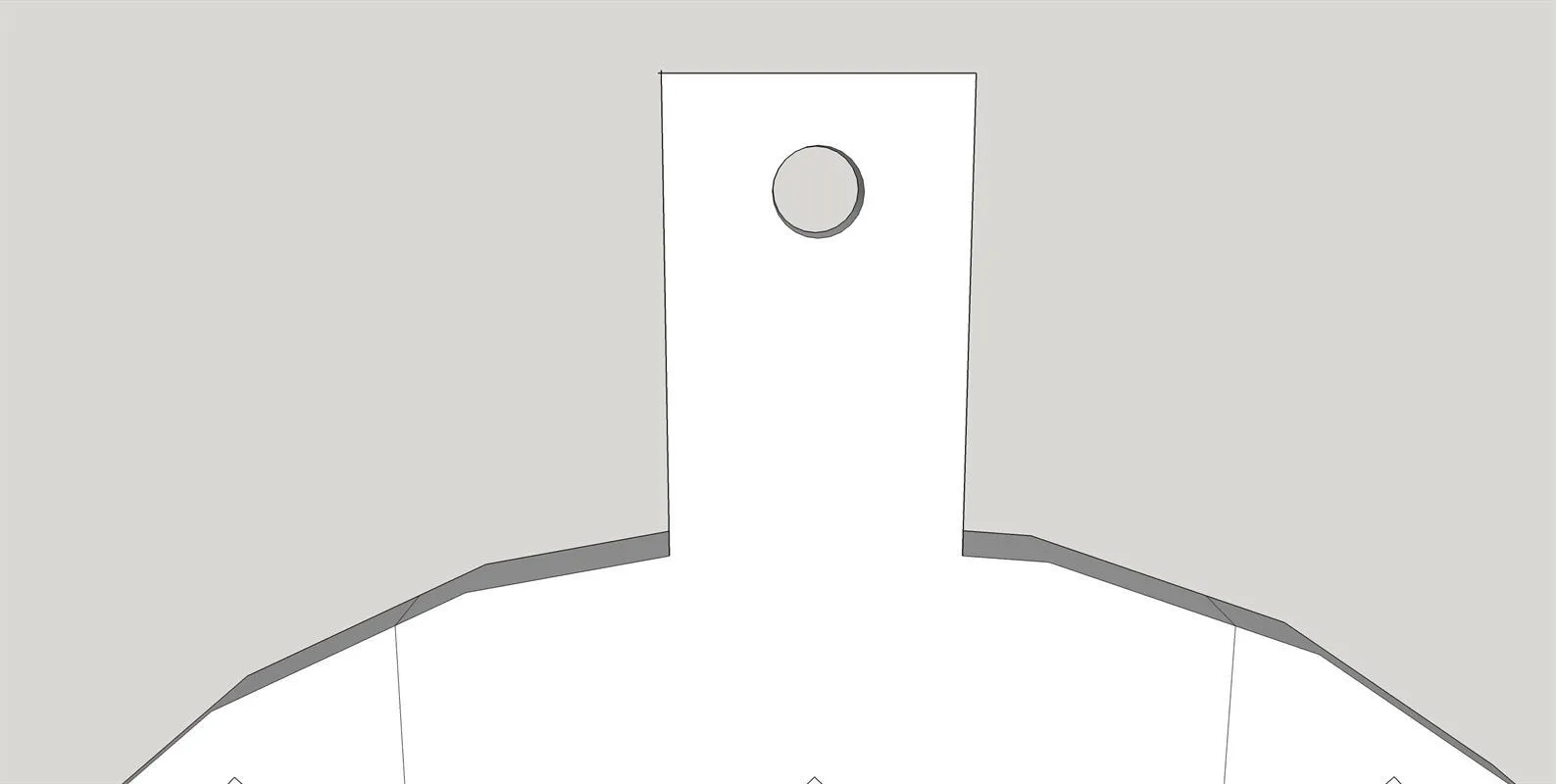
Using a 3/4" spade drill bit to cut a hole in the handle. You can choose a location higher up in the handle or closer to the center.
9. Round Edges (optional)
If you own a router, you can round out the corners on the front and back with a roundover bit. If you don't own a router and still want to round them out, just use your orbital sander and carefully sand down the edges to round them out.
10. Final Sand & Oil
Sand with a 120 grit sandpaper, followed by 220 grit sandpaper to give the bread board a smooth finish. Use a butcher block oil, mineral oil, or other food-safe oil on the board by coating it several times, letting the oil soak in between coats.